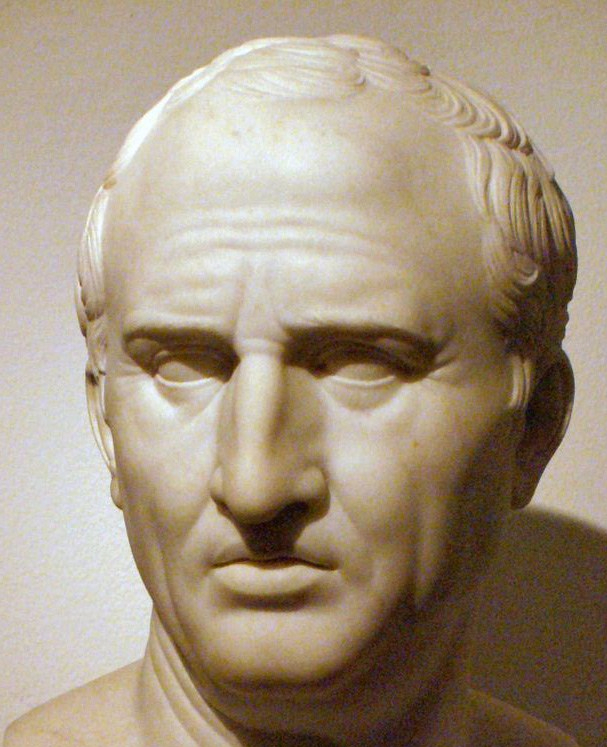
For my latest talk I’ve been delving into the history of libraries. There are a few good modern books on the subject, but mainly from American authors. Lionel Casson’s “Libraries in the Ancient World” (Yale, 2001) is highly recommended. It’s enjoyable and remarkably concise. Casson covers the history of the earliest libraries, with some great illustrations, from Mesopotamia up to 7th century Europe and the dawning of the Medieval monastery. Drawing on letters and memoirs he wittily brings the experience of centuries of bibliophiles to life. Men like Cicero (above), who took full of advantage of the Roman Republic’s unofficial inter-library loan scheme. Scholars and statesmen like himself would send out slaves around the Italian peninsula to source books from the private libraries of their peers and then get them copied before returning the originals. Cicero himself never stopped writing political speeches and histories, but without any municipal libraries (none were built in Rome until after his death) he had to rely on the collections of friends when researching. There were Roman bookstores but, as they hadn’t the reputation of those in Athens or Alexandria, you couldn’t always rely on one of their scribes to reproduce a text accurately. Cicero also had problems with his own librarian, a chap called Dionysos (probably a Greek, as the best librarians were) who absconded to Illyria with a sackful of valuable scrolls. 2 years later Cicero was still writing to the commander of the area enquiring about the slave’s whereabouts. Clearly a valuable man, with valuable booty.
Uncovering the Library


One thought on “Uncovering the Library”