“She was anything you wanted. A dog, a mouse, a bird, an idea, a thunderstorm.”
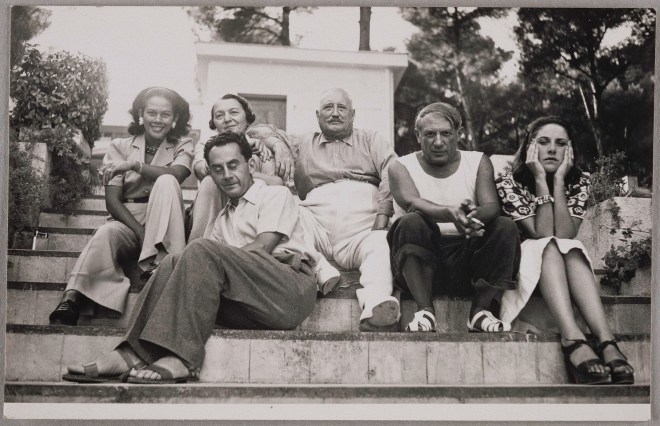
A vital influence on Pablo Picasso’s life and art in the late 1930s was the Croatian/French artist Dora Maar (above, far right). Thanks to her we have the best visual records of Picasso at work, but her fiery socialism may also have awakened a hitherto dormant political passion within the artist that helped make “Guernica” the angry masterpiece we see today.
In 1936 Picasso was still married to the Russia ballerina Olga Koklova, with whom he’d had a son, Paulo. The two were now estranged because in 1927 the artist had met the 17 year old Marie-Therese Walter. Their secret affair didn’t remain secret for long as she became his model for a series of erotic, colourful portraits. A daughter, Maria was born in 1935 and Picasso ensconced both mother and child at the palatial country home of art dealer Ambroise Vollard, away from the decadent squalor of his Paris apartment.
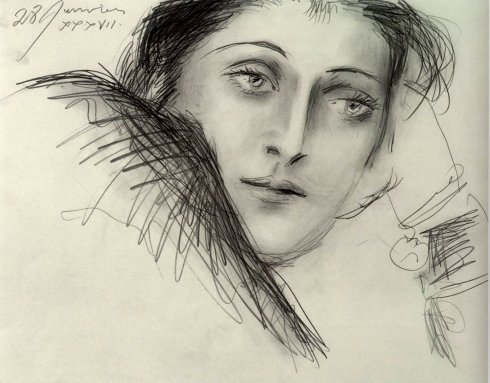
Henrietta Theodora Markovitch (above) had been born in Paris in 1907, grew up in Argentina but returned to her birthplace to study art and photography. She joined the young set of surrealists, was getting her work published and displayed and was introduced to Picasso at a cafe in 1936 by the poet Paul Eluard. The dark beauty rapidly driving a knife into the table-top between her fingers was impossible to ignore and at the end of the evening the painter asked for her now blood-stained gloves as a souvenir. They would not become lovers for some months, but more crucially Maar, very much Picasso’s intellectual equal, would inspire and enable him to embark on an ambitious new chapter in his career.
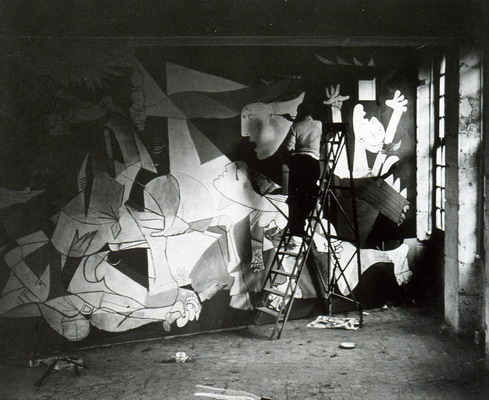
The commission from the Spanish Republican government in January 1937 to paint a mural for the World’s Fair would require a vast new studio and Maar found an attic in an old seventeenth-century building that would suit. Uniquely, not only did Maar become his model (for both “Guernica” and the “Weeping Women” series), but Picasso, would become hers. As “Guernica” took shape Picasso’s new partner studiously photographed each of the 10 stages of its development as well as making intimate portraits of the artist at work (see above). The photographs are an invaluable record for art-historians and works of art in the own right, lit sometimes by the tall windows to the right of the vast, propped up canvas, or by huge electric lamps. As a testament of how much Picasso trusted Maar, she assisted him on a finishing touch for the canvas, painting dozens of tiny lines on the body of the wounded horse, marks that are redolent of newsprint, or perhaps representing the numbers killed during the bombing.
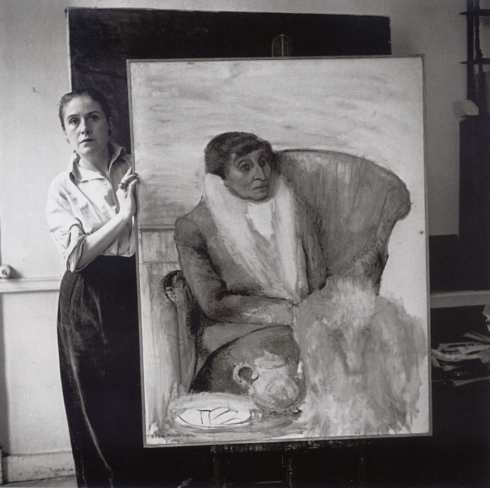
Despite this fruitful collaboration theirs was a stormy relationship as Picasso continued to see and support Marie-Therese and later took another lover in the young Francois Gilot. Both bravely stayed in Paris during the Nazi occupation but Picasso brutally cast aside Maar around 1943 and she would later suffer a nervous breakdown. These difficult years saw Maar move away from photography and become a distinctive painter in her own right (see above). She was still painting vibrant abstracts into old age and would die in Paris in 1997, the last of the surrealists who had shaken up the art-world between the wars.
further
See this link for some examples of Dora Maar’s photography.


Reblogged this on Brent Libraries Blog and commented:
Great preview of some of the issues that will be raised in the talk at Willesden on 22 May. Book now! – https://www.eventbrite.co.uk/e/guernica-and-beyond-tickets-43977550036
LikeLike