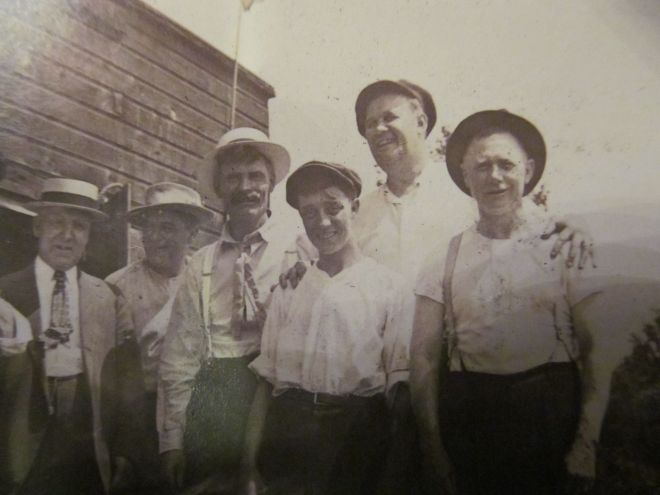
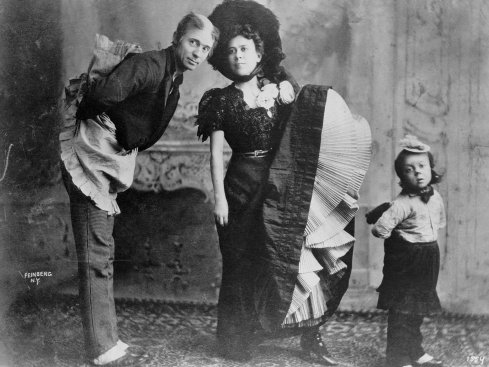
Joseph “Buster” Keaton (above, centre as a teenage vaudeville star) is today renowned as a comic actor and director of brilliance. His silent films of the 1920s, from “One Week” to “The Cameraman”, rank amongst the funniest and cleverest ever made. Through these years Keaton developed a consistent comic persona, less charming than the boyish Harold Lloyd and less aggressive than Chaplin’s tramp, a stone-faced youth – a stoic, often bewildered, everyman in a flat hat. Unlike his contemporaries, this far more passive figure was rarely the master of his comic universe, he was somebody to whom things happened. Comedy was not found in the character’s appearance or personality but rather in the extreme or absurd situations he found himself in: from being chased by hundreds of cops or a herd of stampeding cattle to surviving a house collapse in the middle of a hurricane. From 1920 he never smiled in a solo movie, and not even in his wedding photographs. But it was all in aid of provoking richer laughter in the audience. A lesson taught by his vaudeville-performer father, also called Joseph or Joe. As a child performer Buster was known as “The Human Mop”, literally pushed around by Joe, another act saw a luggage handle sewn into his costume, allowing Joe on more than one occasion to despatch a heckler by flinging his son into the audience. After each stunt Joe would remind Buster not to react, whispering the word “Face!”, the child’s deadpan reaction to another stage humiliation guaranteed a bigger round of applause they found.
However despite the public “stone-face”, Buster Keaton was a laugh. He was counted as one of the most sociable of Hollywood stars. A little too sociable as he got badly addicted to booze in the late 1920s. He had a wide circle of friends and working on his movies was all about fun. He was obsessed with baseball and time would always be found for cast and crew to wind down with a game. But what is probably least appreciated about Buster is that he was the master of the practical joke. One famous episode saw him masquerading as a useless and clumsy waiter when his best friend Roscoe Arbuckle entertained the famously humourless Paramount Pictures chief, Adolph Zukor. He’d started young with this horseplay. In 1908 Joe Keaton with some vaudeville buddies had set up camp on the shores of Lake Muskegon in Michigan during their summer break from touring. Permanent clap-board houses were built that would form the Bluffton Actors’ Colony. A place where itinerant artists and their families could put down some roots. The teenage Buster had never had a real home, never been to school, but Bluffton would teach him how to cook fish over a fire, how to play ball and how to fix stuff. The young comedian discovered a gift for engineering, not only building engines, but also building gags. Ed Gray was a lazy, overweight neighbour of the Keatons. Prone to oversleeping, Buster rigged his alarm clock to motors that would drag his bedsheets away and light his stove. Mr Gray also had a problem with trespassers. Hikers caught short in the beautiful surroundings would rudely avail themselves of his outside lavatory. Keaton’s ingenious solution was to take the out-house apart, saw up the structure and then rebuild-it rigged with springs. A cheeky rambler helping themselves to the facilities with one tug of a rope by Gray would find themselves exposed. It is with the greatest regret that I have to say Buster never managed to replicate this moment on screen.

