I’m not a huge Christopher Nolan fan. His films have got increasingly louder and longer over the years, they usually feature a tortured male protagonist played rather woodenly by a famous actor, female characters are incidental to the action, whole scenes play out in semi-darkness and there is precious little humour. “The Odyssey” is afflicted by many of these faults yet somehow it’s Nolan’s most entertaining effort in years. It has spectacular action sequences, with welcome practical effects and a noble ambition to re-imagine one of the great tales of literature to make it accessible to a modern audience.
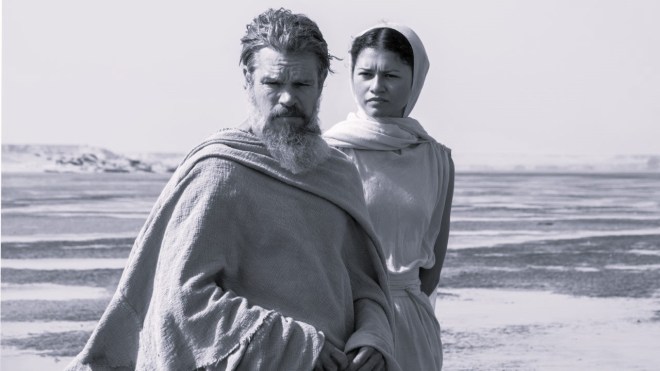
So, a good story, pretty well told from beginning to end about (what translator Emily Wilson has described as) a “complicated” man and his journey home from war, but overall it’s a frustrating, rather empty movie. Ironically had Nolan stayed more faithful to Homer’s original adventure tale of derring-do on the high seas, we’d have got all of that missing humour and a lot more sex, bickering gods and female characters who actually advance the plot. Sure Anne Hathaway’s Penelope, Lupita Nyong’o’s Queen Helen, Charlize Theron’s Calypso and Samantha Morton’s Cerci get lines, but they are stripped of much of their character, status and agency. There is at least one princess and multiple nymphs cut from the action, we barely see the sirens and most galling of all, the goddess Athena who drives much of the action through multiple disguises and interventions in Homer, is relegated to a cameo for Zendaya shaking her head at Matt Damon’s Odysseus like a disappointed soccer mom.
Instead, we are left with a very macho retelling full of repetitive scenes of angry soldiers shouting at each other in the dark. I am sympathetic to the anti-war message Nolan is trying to convey and the Trojan war scenes are well done, but Damon’s portrayal of the lost king is very much on one tortured note. He’s a bit more fun in the original and I miss the scene where washed up naked on one beach he has to hide his cock from some sexy handmaidens with a big leaf. The version I am most familiar with is the Robert Fagles translation from the 1990s and I recommend the audiobook read playfully by Sir Ian McKellen. Still, the success of the film is that it requires no prior knowledge of the source, standing on its own as perfectly good entertainment and the 3 hours fly by. Nolan has a knack of giving audiences what is lacking in modern cinema, treating them with a bit of respect and this is a great example of aspirational, even intellectual, popular film-making. But the writer/director also strips away much of what makes Homer so good. My frustration is that I think he ultimately short-changes the poem and the viewer – I didn’t feel I got to know or care about any of the characters, and there could’ve been more magic, seeing gods and people interact, and much less manly angst. I suppose I’m more of a “Clash of the Titans” kind of person when it comes to my mythological movies.
For more film reviews see my new page on Letterboxd.

